

Blood Oxygen Saturation
Guy Van Elsacker
Tuesday, March 16, 2021 at 9:53
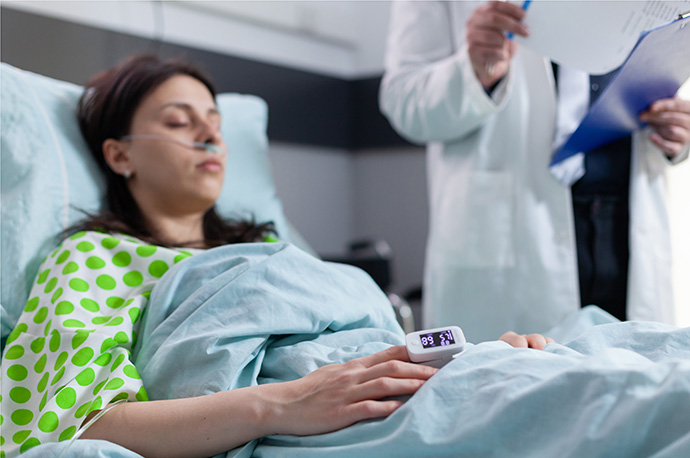
Researchers have begun to solve one of COVID 19’s biggest and most life-threatening mysteries: how the virus causes “silent hypoxia”, a condition where oxygen levels in the body are abnormally low. Those low oxygen levels can irreparably damage vital organs if gone undetected for too long.
More than a year since COVID-19 began spreading in the US, scientists are still solving the many puzzling aspects of how the novel coronaviruses attacking the lungs and other parts of the body, experiencing dangerously low lvels of oxygen, many people who are infected with severe cases of COVID-19 sometimes show no symptoms of shortness of breath or difficulty breathing.
Hypoxia’s ability to quietly inflict damage is why health experts call it “silent”. In coronavirus patients, researchers think the infection first damages the lungs, rendering parts of them incapable of functioning properly. Those tissues lose oxygen and stop working, no longer infusing the blood stream with oxygen, causing silent hypoxia. But exactly how that domino effect occurs has not been clear until now. “We didn’t know [how this] was physiologically possible” says Bela Suki, professor of biomedical engineering and of materials science and engineering at Boston University and one of the co authors of the study in Nature communications. Some coronavirus patients have experienced what some experts have described as levels of blood oxygen that are “incompatible with life.” Disturbingly, Suki says, many of these patients showed little to no signs of abnormalities when they underwent lung scans.
To help get to the bottom of what causes silent hypoxia, biomedical engineers used computer modelling to test out three different scenarios that help explain how and why the lungs stop providing oxygen to the bloodstream. They found that silent hypoxia is likely caused by a combination of biological mechanisms that may occur simultaneously in the lungs of COVID-19 patients, says lead author Jacob Herrmann, a biomedical engineer and research postdoctoral associate in Suki’s lab.